Barktown
Identify and document the disturbing dog noises using AI-powered bark detector
Collecting examples of barks
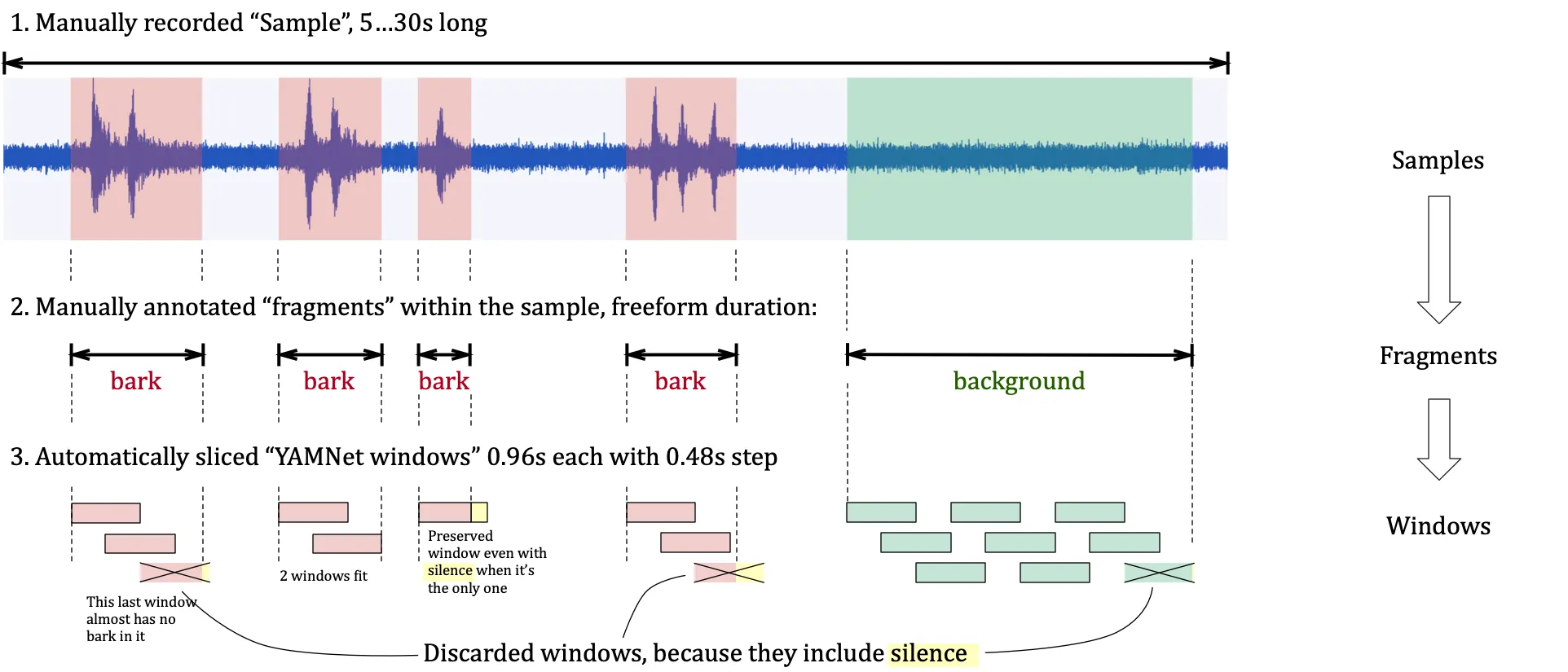
The AI bark detector had to learn from local examples of sounds, so we made a system to record and label those. Apart of actual barks and yaps we have also collected examples of everything that is not a bark: traffic, wind, wildlife, homestead, etc
In each sample recordig we have manually labeled fragments that sound representative. These fragments are later sliced into yet finer portions called "windows" by the learning model called YAMNet, see the next section
How the AI was trained
YAMNet is a pre-trained deep learning model by Google that identifies 521 different audio event classes — like animal sounds, speech, or sirens — from an audio waveform. The Barktown learning happens on top of YAMNet's existing learning. This is called transfer learning. It lets us train a useful local detector with far fewer examples than would be required to build an audio model from scratch. An analogy would be hiring someone who already understands sound generally, then training them on the specific distinction that matters at this location.
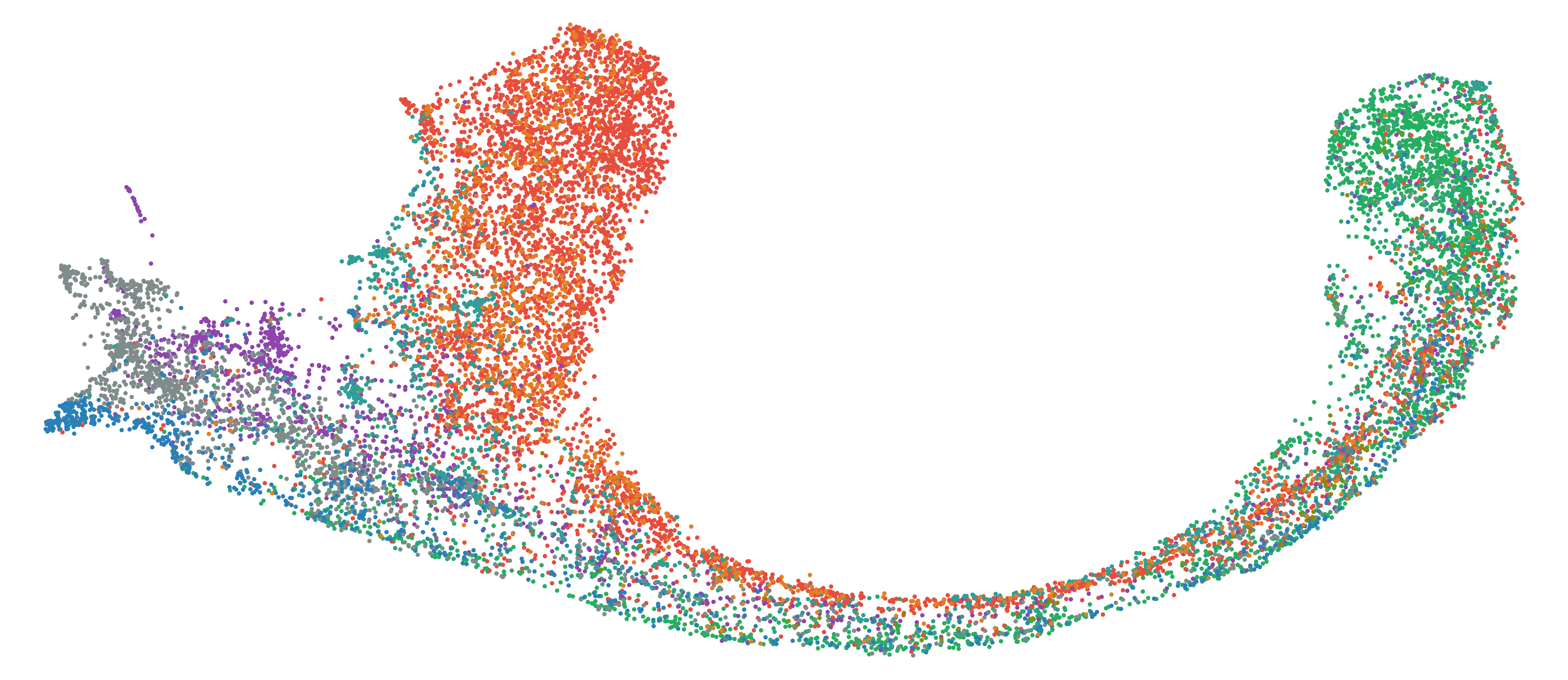
Barktown uses YAMNet model as a sound-feature extractor: each short audio fragment is converted into a 1024-number “sound fingerprint” describing patterns YAMNet has already learned, such as rhythm, pitch and texture. Our labelled samples then train a much smaller Barktown classifier to interpret those fingerprints and learn the local distinction between bark/yap and everything else, with confusing negative examples deliberately included
From sound to a diary record
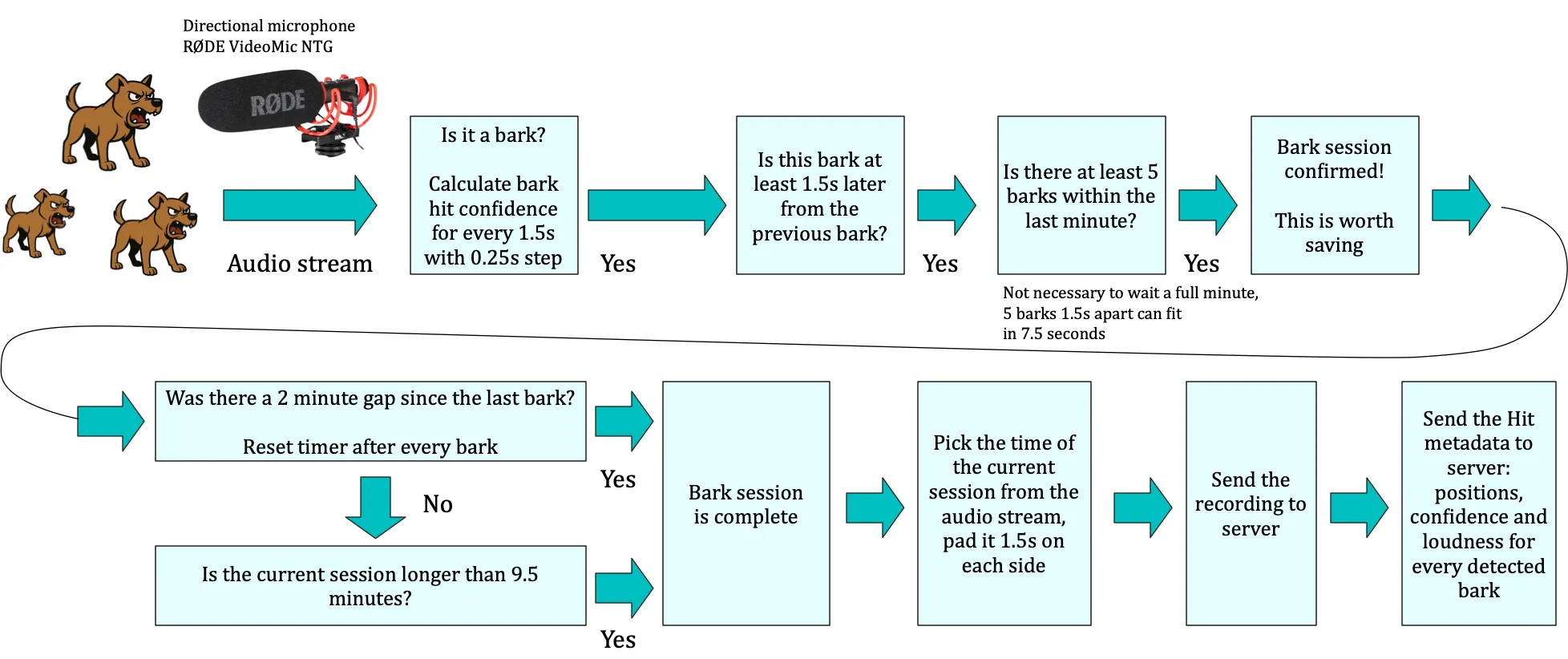
Barktown repeatedly checks recent sound, waits for several matching observations, then preserves a recording of the whole session. The result is uploaded, organised and placed in the diary for a human review.
Recent sound is held temporarily in memory. A clip is retained only after several bark-like observations support one event, with a small amount of sound before and after it for context. A single high score is not enough. The detector asks for repeated evidence within a time window, prevents one bark from being counted several times and joins nearby barks into one session. When the session is over, it saves the surrounding audio and sends both the recording and its measurements to the archive.
System architecture
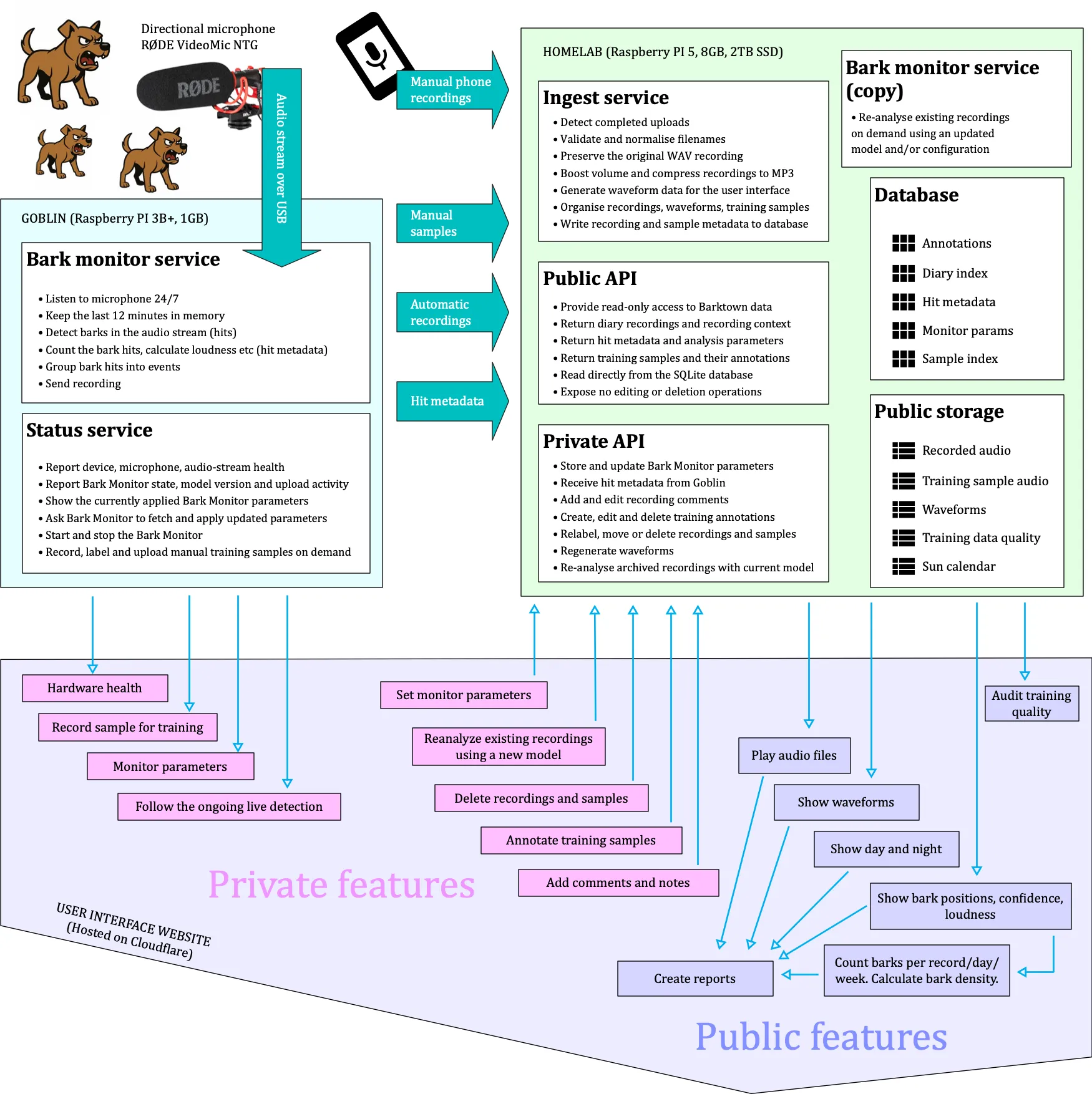
Listening, storage and presentation are separate parts of the system. The detector can keep working if the web page is closed, while recordings remain available for later review.
The field device runs the microphone and detector. A second service validates uploads, stores audio and metadata, and provides the application interface. The Barktown website reads that interface to show the diary, reports and training workspace; laptop tools handle calibration, data inspection and model training.